Materials that are often suitable for this type of process are mostly flexible, such as:
- rubber
- foam
In some cases, this material is not laminated but simply wound. If desired, we can cut the sheet material to a preset length before winding.
In some cases the sheet to roll process is used after calendaring. Calendaring is a technique whereby a series of hard pressure rollers is used to finish or smoothen material into a sheet. After laminating and processing the material, it can be winded to a roll.
Advantage
The advantage of a sheet to roll process is that the material can easily be transported. In some cases, a roll itself is the finished product.
Machines
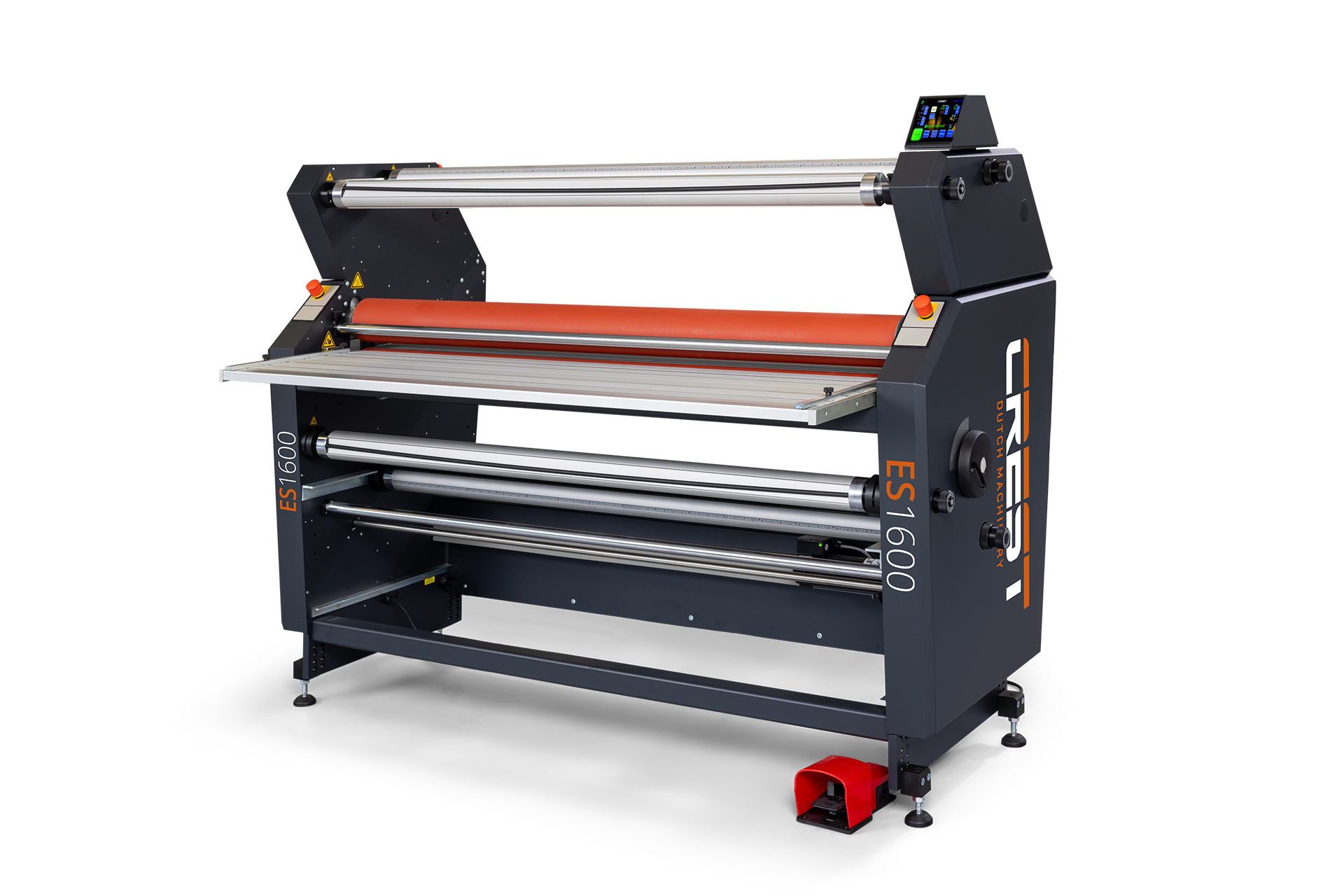
ES 1600
Industrial laminator for high-quality lamination and panel mounting; stable, fast, configurable.
Read More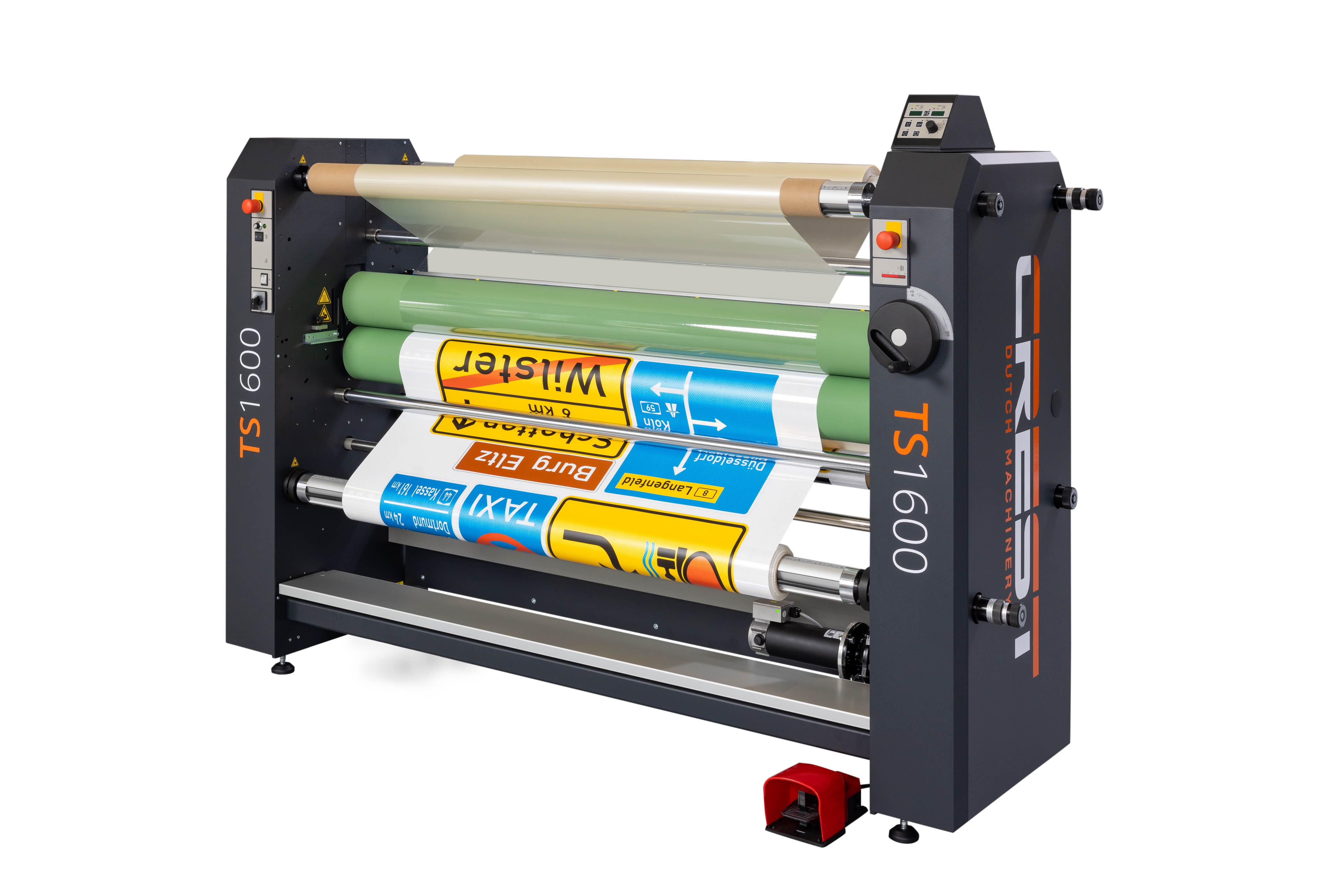
TS 1600
Heavy-duty laminator built for high-pressure, high-quality lamination using heat assist designed to deliver streak-free results without silvering, even on rough and UV-printed surfaces.
Read More
TS
The Crest TS laminator is a high quality lamination machine using heat and high pressure. The machine is very suitable to apply a protective laminate on top of UV printed substrates for example. The TS’s special characteristics avoid silvering effects when applying pressure sensitive laminates on rough surfaces and UV printed material.
Read More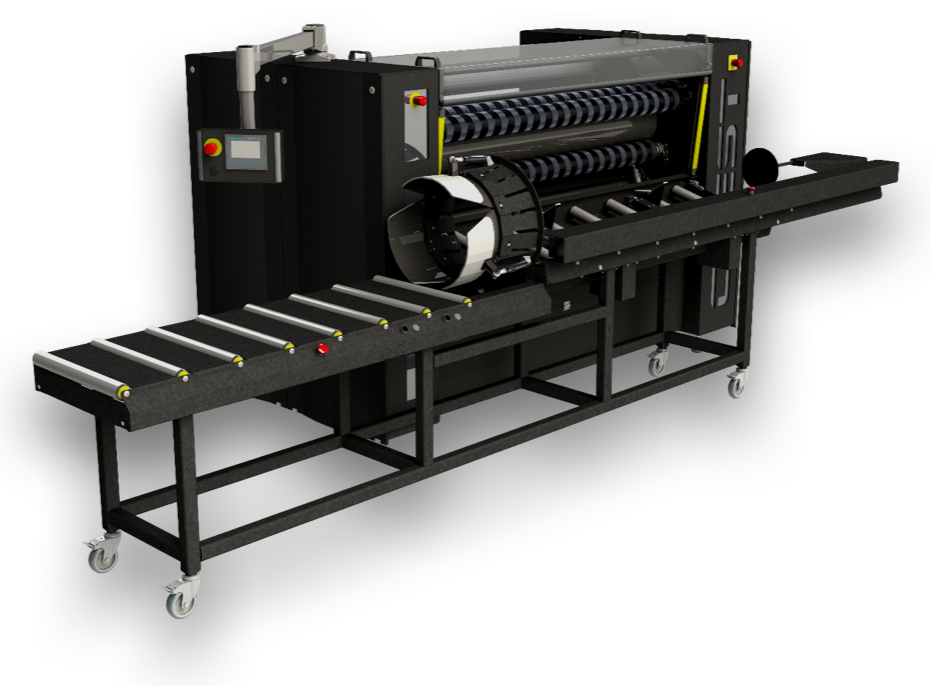
Coreless Winder
The Crest Coreless Winder is developed to wind materials like carpets and underlayment without cores. Finished coreless rolls, can be cut to the desired length according to input recipes and can be packed into a bag semi-automatically.
Read More